


Hello, I’m Mandeep. Welcome to my Watch and Learn English substack. My aim is to teach “real-life” English using videos and topics that are in the news.
What’s on this week?
This week, we look at a new documentary about a famous reality TV show. Our language point focuses on talking about situations from the past and deciding if we feel the same about them.
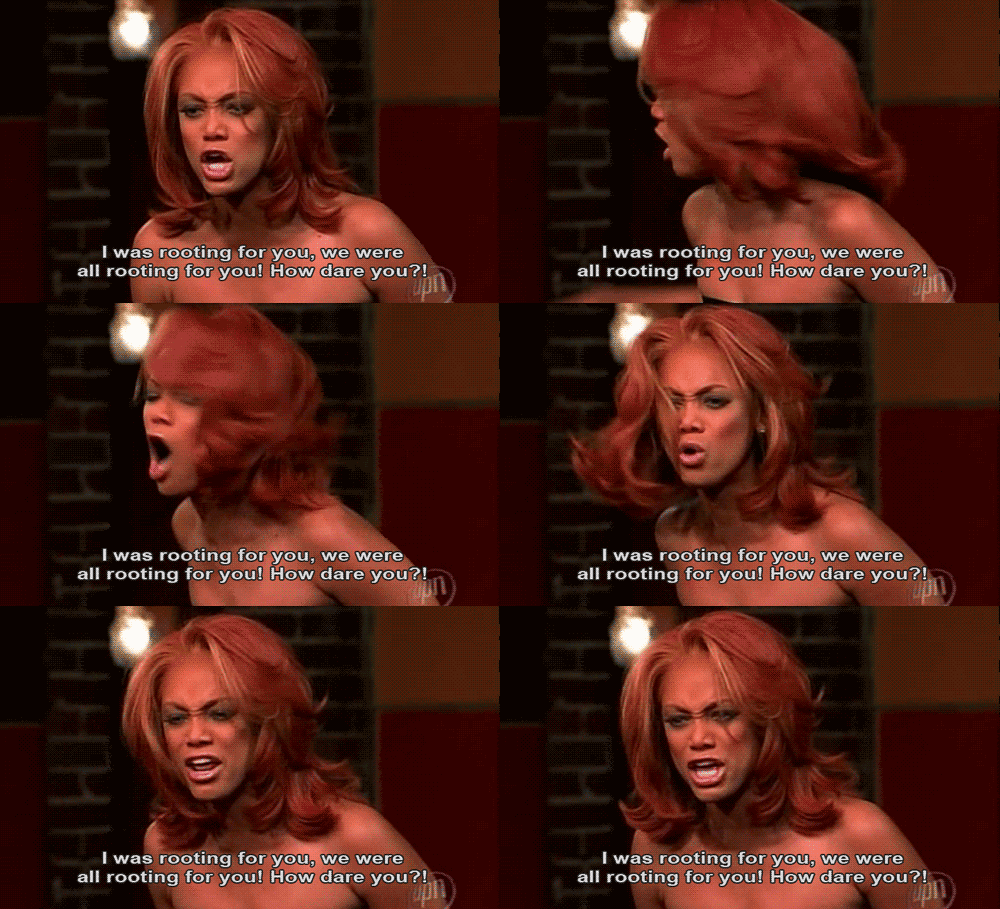
The new Netflix docuseries Reality Check revisits America’s Next Top Model, a show that ran from 2003 to 2018 that was one of the biggest hits on TV. Even if you’ve never seen the show you might recognise some of the clips and memes that come from it. In one famous scene, the presenter supermodel Tyra Banks screams at a contestant she’s not happy with.
In the early 2000s, reality TV was everywhere. Shows like Big Brother and Survivor promised unscripted drama and lots of emotion. It felt like everybody was talking about what happened on our screens the night before! There were clear heroes and villains and it all seemed like harmless fun.
But over time, people began to question how real the “reality” part was. It became more obvious that shows were edited to be entertaining and not truthful and that some of the people taking part were suffering as a result both during and after filming.
This leads to our language language focus this week. We look at some specific phrases you cna use to talk about how things were different in the past.
This week we have:
Video of the week – the trailer for Reality Check
Vocabulary focus – language of reassessment
Let’s get started
1. Video of the week – Reality check
This week’s video is the trailer for Reality Check, a documentary that looks again at America’s Next Top Model.
One moment in particular became famous: a confrontation between Tyra Banks and a contestant that was widely shared online years later. At the time, it was seen as dramatic television. Now, many viewers describe it as troubling.
The documentary asks what was happening behind the scenes and whether the show crossed lines in the way it treated contestants.
It also reflects a wider conversation about reality TV. In the early days, harsh criticism and emotional breakdowns were often accepted as part of entertainment. Today, discussions about mental health and duty of care are more common.
As you watch, think about this question:
Why do some programmes feel different when we watch them years later?
🎬 Watch with subtitles you can trust — and click any word to learn more.
You can click here to watch the video for free with clear, accurate captions (not auto-generated) and even slow the playback to catch every word.
If you’d like to go deeper, click on any word in the subtitles. With unlimited access (€1.99/month), you’ll get:
Words and phrases explained in context
Comprehension exercises
Mobile-friendly study on your phone
A weekly vocabulary summary to help you remember what you’ve learned

2. Language Focus: Changing how we feel about the past
In this section, we look at expressions to talk about viewing the past with different eyes.
From today's perspective
“From today’s perspective, some scenes feel uncomfortable.”
We use this when we want to explain what people believed during a specific period in the past.
Looking back
“Looking back, some of those episodes feel problematic.”
We use this when speaking from the present about a past experience.
With hindsight
“With hindsight, it’s clear that some contestants were under a lot of pressure.”
This suggests that we understand something now that wasn’t obvious before.
It hasn’t aged well
“Some parts of the show haven’t aged well.”
This is often used about films, jokes, or public behaviour that feel inappropriate today.
Through a different lens
“People are now watching old seasons of reality tv through a different lens.”
Here, “lens” means point of view.
Back then
“Back then, reality TV pushed boundaries and audiences didn’t question it.”
This refers to a time in the past, often many years ago.
In hindsight
“In hindsight, the producers should have stepped in earlier.”
You can also say “with hindsight” and this phrase is used in reflective situations.
🎧 Extended Audio: After watching the docuseries
Now listen to a slightly longer audio.
“I watched the documentary last night. At the time, I really enjoyed that show. I didn’t think much about how it was made. But looking back, some of the scenes felt uncomfortable.
With hindsight, it’s easier to see how editing created certain storylines. Back then, I just accepted that as part of reality TV. I didn’t really question it.
Some moments haven’t aged well at all. Watching it through a different lens now, I can see how much pressure those contestants were under. In hindsight, the whole culture around reality TV feels different.”
Final Thought
It’s normal for attitudes to change over time. What once felt acceptable can later feel uncomfortable. That shift is part of how culture develops.
Do you still enjoy reality TV, or do you watch it differently now?
Learning phrases for specific situations like this — reflection, reassessment, disagreement — makes English easier to use in real conversations. The more you notice language in context, the easier it becomes to recognise and use it yourself.
Thank you for being part of this community of English learners around the world.
See you next time,
Mandeep
Say hello
Please let me know what you think of my post. Your feedback is appreciated.
Loved it | Great | OK | Meh | Bad
We have 22.000 subscribers in 123 different countries! Please come and say hello to everybody in the comments. I’d love to know what you’re watching this week.


